Gone, Then Greater: The Hidden Power of an Artist's Second Chapter
There's this unspoken rule in creative culture that says you can never stop. Post consistently. Release regularly. Stay in the conversation. The algorithm rewards the relentless, and silence feels like surrender.
But here's what nobody puts in the caption: some of the most extraordinary creative work in American music and art history didn't come from someone grinding through their prime years. It came from someone who walked away, lived a little, fell apart a little, and then came back with something nobody saw coming.
The second act isn't a consolation prize. For a lot of artists, it's the whole point.
The Myth of the Unbroken Streak
We've been sold this idea that creative relevance looks like a straight, upward line. You start young, you build momentum, you peak, and then — if you're not careful — you fade. The fear of fading is real. I've felt it. Most creatives have.
But that model doesn't actually hold up when you look at the evidence. Take Bonnie Raitt. She spent decades as a respected blues and rock artist, released album after album through the seventies and eighties, and then her label dropped her. By the late eighties, she was dealing with health struggles and a career that had stalled out. She could've called it. Instead, she got sober, regrouped, and recorded Nick of Time in 1989. It won four Grammy Awards, including Album of the Year. She was nearly forty.
Or consider Rick Rubin helping Johnny Cash reinvent himself in the nineties with the American Recordings series. Cash was in his sixties, largely dismissed by mainstream country radio, and facing a music industry that had moved on without him. What followed was some of the most emotionally resonant work of his entire career — spare, honest, and completely unafraid.
These weren't flukes. They were the natural result of artists who had something to say that could only come from having lived through the in-between.
What the Break Actually Does
Stepping away from your creative work — whether by choice or by circumstance — does something that constant output can't. It creates distance. And distance, it turns out, is one of the most underrated creative tools there is.
When you're in the middle of something, you can't see it clearly. You're reacting to trends, to feedback, to your own anxiety about whether anyone is listening. The break strips all of that away. You stop making work for an audience and start remembering why you made it for yourself in the first place.
A lot of artists describe their second chapter as the first time they felt truly free. Not because the stakes disappeared, but because they stopped being afraid of losing something they'd already let go of. There's a particular kind of courage that comes from having nothing left to protect.
Reinvention Isn't Betrayal
One of the things that holds creatives back from their second act is the fear that changing direction means abandoning the people who supported them first. Like if you pivot from folk to electronic, or from painting portraits to abstract work, you're somehow letting your original fans down.
But your audience — the ones who actually care about you as an artist and not just as a product — they're not following a genre. They're following you. Your perspective, your honesty, your willingness to take risks. When you change, and you do it with integrity, those people come with you. And often, they bring new people along.
David Bowie built an entire career out of this principle. Every few years, a new character, a new sound, a new visual language. Some fans grumbled every time. But the body of work he left behind is one of the most diverse and enduring in rock history, precisely because he never stayed comfortable long enough to calcify.
You're allowed to outgrow your early work. You're allowed to look back at it with affection and still walk in a completely different direction.
Practical Signs You Might Be Ready for a Reset
Not every creative slump is a signal that it's time for a reinvention. Sometimes you just need a good night's sleep and a new playlist. But there are a few signs that something deeper might be calling for your attention:
- You're making work you don't believe in. You're going through the motions, producing content that checks boxes but doesn't move you.
- You've stopped surprising yourself. If you can predict exactly what you're going to make before you make it, you might be on autopilot.
- The process feels like a performance. When you're more focused on how something will be received than on what it actually means, something's off.
- You keep circling back to an old idea you abandoned. That nagging thing in the back of your head? It might be worth revisiting.
None of these are verdicts. They're just invitations to pay attention.
The Return Is Its Own Art Form
Coming back after a break — whether it's six months or six years — requires its own kind of courage. The world kept moving while you were gone. New artists emerged. Tastes shifted. The platform you built might have gone quiet.
But here's the thing about returning with genuinely new work: it cuts through noise in a way that consistent output rarely does. People pay attention to transformation. They're drawn to the story of someone who went away and came back different. There's something deeply human about that arc — the departure, the wilderness, the return.
It's the structure of almost every great story ever told. And your creative life is a story worth telling.
Your Second Chapter Is Waiting
If you're in a place right now where the work feels stale, where you're questioning whether any of it matters, where you're wondering if you should just quit — I want to offer a different frame. Maybe you're not at the end. Maybe you're at the intermission.
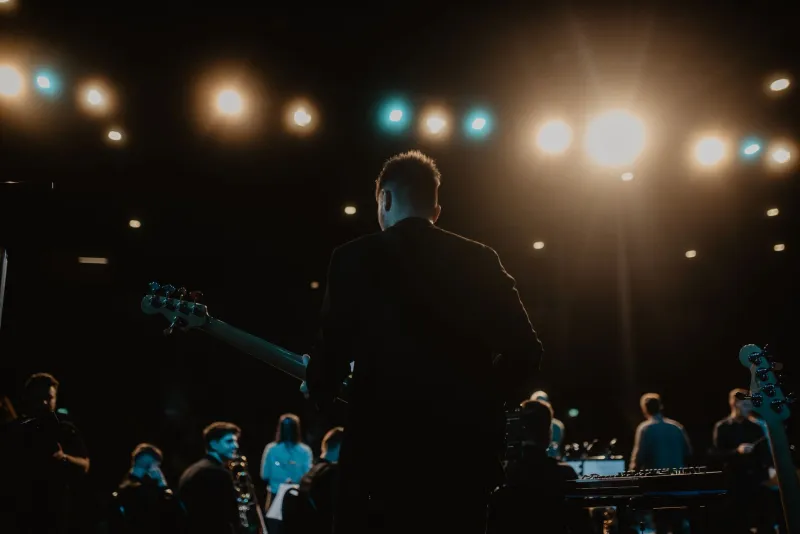
The encore that changes everything doesn't come from someone who never left the stage. It comes from someone who walked off, caught their breath, figured out what they actually wanted to say, and then came back out swinging.
That could be you. It might already be in progress.
Give it time. Give it space. And when you're ready — come back loud.