Show Order Matters: What a Musician's Setlist Can Teach You About Building a Creative Legacy
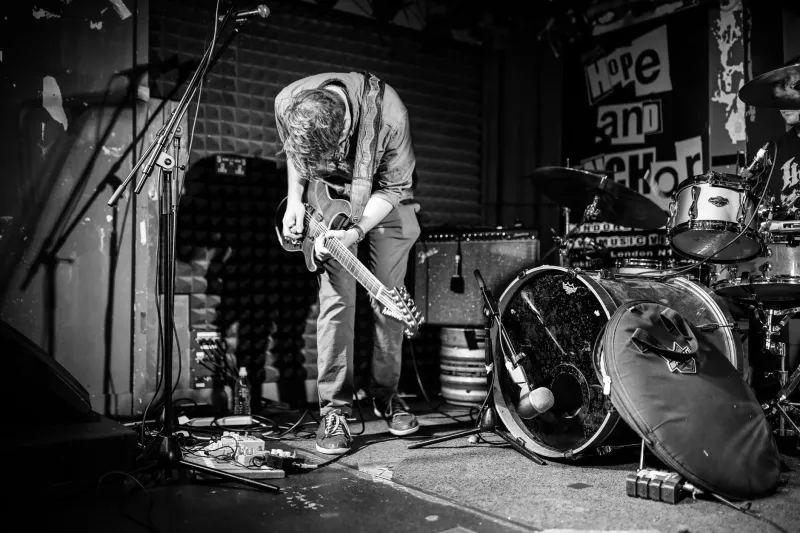
There's a moment before every great show — usually somewhere between soundcheck and the first chord — where the band huddles over a piece of paper or a phone screen and argues about the order. Does the slow burn open the night, or do you come out swinging? Does the deep cut go in the middle where the faithful will lose their minds, or does it close things out as a quiet gut-punch? Every decision matters. The setlist isn't just a list. It's a story with a beginning, a tension-filled middle, and an ending the audience carries home with them.
Here's the thing: your creative career works exactly the same way. You've probably never thought of it like that, but stick with me.
You've Already Got a Setlist — You Just Haven't Written It Down
Most creatives accumulate work the way people accumulate stuff in a garage — a little bit of everything, some of it meaningful, some of it embarrassing, and a lot of it just kind of there. Your old blog posts, your early recordings, the paintings you did in college, the short stories that went nowhere. It's all sitting in boxes, real or digital, and right now it's telling a story whether you like it or not.
The difference between an artist whose career means something and one who feels perpetually scattered is usually not talent. It's curation. It's the conscious act of deciding what goes in the set, what gets cut, and what order the remaining pieces play in.
Bruce Springsteen doesn't open with a B-side. Beyoncé doesn't randomly shuffle her catalog on stage. The sequencing is the message.
The Opener: What Do You Want People to Feel First?
When someone lands on your portfolio, your website, your Instagram grid, or your streaming profile for the first time, they're walking into your venue. The first thing they encounter is your opener — and it sets the entire emotional temperature of the room.
Ask yourself honestly: what does your opener say right now? Is it the work you're most proud of, or is it just the most recent thing you posted? Recency and relevance aren't the same thing. The newest track isn't always the right first impression.
Spend some real time thinking about what piece of your work — a song, a painting, a story, a project — best captures the essence of what you do. Not the most technically impressive thing, necessarily, but the most you thing. That's your opener. Lead with that.
The Deep Cuts: Archive Doesn't Mean Erase
Every musician has songs they love that just don't fit the current show. Maybe the vibe is wrong, maybe the lineup changed, maybe it belongs to a version of the band that doesn't exist anymore. Those songs don't get thrown in a dumpster — they go into the vault. And sometimes, years later, they become the thing a devoted fan treasures most.
The same logic applies to your older or more experimental work. Not everything belongs front and center on your main portfolio. But that doesn't mean it should disappear entirely. Consider creating a dedicated archive section — an honest, even affectionate corner of your creative world where the early stuff lives. Label it clearly. Give it context. Let people who want to go deep, go deep.
What you're building is a sense of journey. An audience that can see where you started and trace the line to where you are now will feel far more connected to your work than one who only ever sees the polished highlight reel.
Retiring Songs: The Hardest Call
Some things need to come off the setlist for good. Not archived — actually retired. This is the hardest creative decision most people never make.
Maybe it's a project built around a worldview you've genuinely moved past. Maybe it's work that was technically fine but represents a version of you that's misleading to new audiences. Maybe it's just not good, and you know it, and keeping it visible is quietly undermining everything else you're doing.
Retiring work isn't erasing history. It's editing your narrative. Authors do second editions. Directors do director's cuts. Musicians stop playing the song that doesn't fit who they've become. You're allowed to do the same thing with your body of work.
The trick is doing it with intention rather than shame. You're not hiding the past — you're choosing what story your work tells going forward.
The Closer: What Do You Want Them to Walk Away With?
The closing song of a great set is almost never the loudest or the fastest. It's the one that lingers. Think of a crowd walking out of an arena still humming something quiet, still feeling something they can't quite name. The closer is what the whole show was for.
For your creative legacy, the closer is the answer to this question: when someone has spent real time with your work — really dug in — what's the last feeling you want them to carry out the door?
Maybe it's wonder. Maybe it's comfort. Maybe it's a kind of productive restlessness, the feeling that the world is bigger and stranger than they thought before they found you. Whatever it is, work backward from that feeling. Does your current body of work, as it's presented right now, actually build toward it?
Playing the Long Game
Here's what separates the artists whose work endures from those who fade: they treat their career as a living, breathing creative project — not just a collection of outputs. The setlist changes as the artist changes. New songs get added. Old ones get recontextualized. The show evolves, but the story stays coherent because someone is actively tending to it.
You don't have to have it all figured out today. But starting to think this way — asking yourself what belongs in the set, what gets archived, what gets retired, and what order it all plays in — is one of the most meaningful creative acts you can do for yourself.
Your catalog is already out there. The only question is whether you're the one calling the show.
Go write your setlist.