Two Names, One Soul: Staying True to Yourself When Your Stage Persona Starts Running the Show
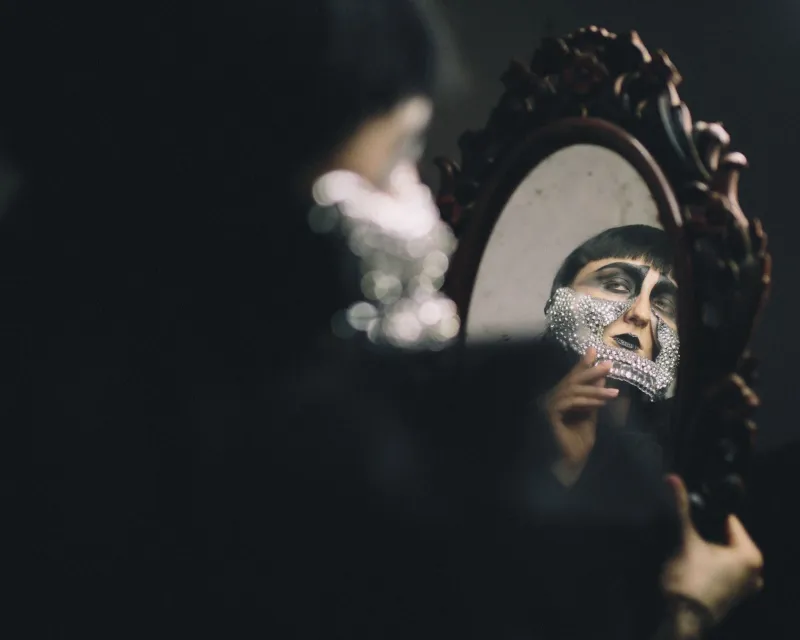
There's a moment a lot of artists don't talk about — not in interviews, anyway. It happens somewhere between the first time a crowd sings your words back to you and the morning you wake up and genuinely can't remember which version of yourself is supposed to make breakfast. The persona you built, the one that felt like a costume at first, has started feeling permanent. And the real you is somewhere underneath it, tapping on the glass.
This isn't a crisis. It's actually a pretty normal part of the creative journey. But it does demand some honest attention.
How the Split Happens in the First Place
Most stage personas don't start as deliberate inventions. They grow organically out of necessity. You need a name that sounds right on a marquee, or a look that reads from the back row, or an attitude that fills the space between songs. You make a few choices early on — a sound, an aesthetic, a way of carrying yourself onstage — and those choices start to compound.
Audiences respond to consistency. So you deliver it. You lean into the parts of the persona that get the loudest reaction. Over time, those choices calcify into expectations. The fans want that version of you. The booking agents book that version of you. And slowly, quietly, the gap between the name on the album cover and the name your mom calls you starts to widen.
David Bowie talked about this in ways that felt almost clinical. Ziggy Stardust wasn't just a character — it was a fully operational alternate identity, and Bowie eventually had to dismantle it before it dismantled him. He described the process of retiring Ziggy as genuinely difficult, not because he loved the persona so much, but because audiences did. Letting go of something people love feels like a betrayal, even when holding onto it is costing you.
You don't have to be Bowie for this to apply to you.
The Authenticity Trap
Here's where it gets tricky. A lot of artists respond to this tension by overcorrecting. They decide the persona is fake and the "real" self is authentic, so they blow up the whole thing — new sound, new look, new direction — and announce it like a liberation. Sometimes it works. More often, it just trades one set of constraints for another.
The truth is that your stage persona is part of you. It came from somewhere real. The mistake isn't building a persona — it's treating it as the only valid version of yourself that's allowed to make art.
Think about Garth Brooks and Chris Gaines. That experiment got a lot of mockery at the time, but what Brooks was doing — trying to explore a part of himself that didn't fit inside the country superstar box — was genuinely brave. The execution was messy, sure. But the impulse was honest. He felt boxed in by his own success and went looking for a door.
The artists who navigate this best aren't the ones who abandon their personas. They're the ones who find ways to let the persona breathe, to let it evolve, to let a little of the private self leak through without torching the whole thing.
Practical Ways to Reclaim the Real You
If you're feeling the squeeze, here are a few things worth trying — not as grand gestures, but as small, ongoing practices.
Write something you're not planning to release. Seriously. Give yourself permission to make something that belongs entirely to you. No audience, no expectations, no persona required. You might be surprised what comes out when nobody's watching.
Let your influences show in unexpected ways. One of the quietest ways to inject your real self back into your work is to let your actual listening habits bleed into what you make. If the persona is a hard-driving rock act but you've been obsessing over Bill Withers for six months, find a way to let that in. The seams where different things connect are often the most interesting parts of a record.
Talk about the gap openly. In interviews, in liner notes, in social posts — wherever it feels natural. Fans are more sophisticated than we sometimes give them credit for. Many of them are navigating their own versions of this tension between who they are and who they're expected to be. Honesty about the duality tends to deepen connection, not break it.
Revisit the origin story. Go back to the earliest work you made before anyone was paying attention. What was in there that you've since edited out? What did you care about then that got quietly dropped because it didn't fit the brand? There's usually something worth retrieving.
The Mirror Question
At the end of the day, the real test is pretty simple. When you finish a song or a record or a show, do you feel like it came from somewhere true? Not necessarily comfortable — true and comfortable are different things. Some of the most honest work you'll ever make will feel terrifying to put out. But there's a specific kind of hollow feeling that comes from delivering something technically polished that has nothing of the actual you in it. Most artists know that feeling. Most of them hate it.
The name on the album is a tool. It's a useful, valuable, carefully built tool. But it works for you — not the other way around.
The person who made the thing, the one who sat alone with a guitar or a piano or a laptop at two in the morning and found something worth saying — that person's name matters too, even if it never appears on a tracklist.
Keep those two names in conversation with each other. Don't let one drown out the other. That tension, honestly held, is often exactly where the best work lives.