What You Never Made Might Define You Most

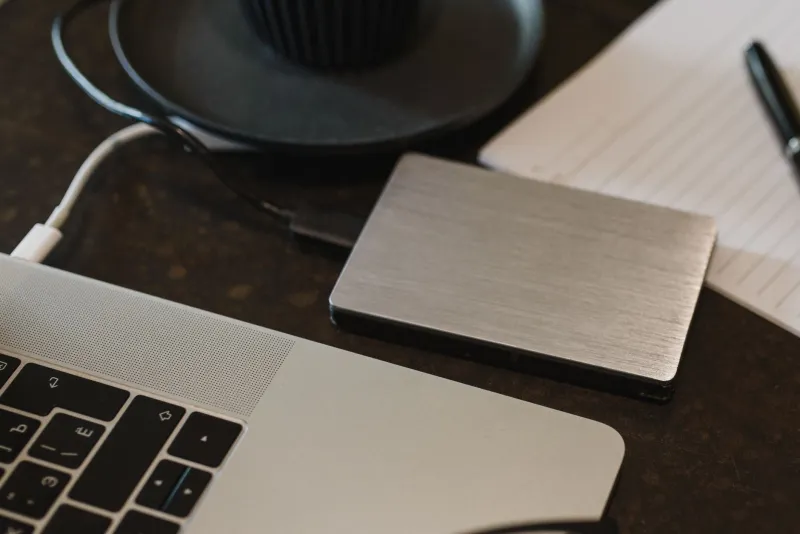
There's a version of me that made ambient electronic music. I bought a secondhand synth, watched about forty hours of YouTube tutorials, and spent three months building tracks that sounded like a airport lounge crossed with a nature documentary. Nothing ever got released. The folder still lives on an old hard drive somewhere, probably next to a half-finished reggae project and a brief, deeply misguided flirtation with trap beats.
None of that ever became anything. And for a long time, I thought of those detours as creative dead ends — time spent going nowhere. But lately, I've started thinking about them differently. Because here's the thing: every single one of those abandoned experiments taught me something that the songs I did finish never could.
The Negative Space of a Discography
In visual art, there's this concept of negative space — the empty area around and between the subjects of an image. Used well, it's just as expressive as the painted parts. It shapes how you see everything else.
Your unreleased work, your abandoned genres, your collaborations that fell through before anything got recorded — that's your negative space. It outlines your artistic identity just as precisely as your best songs do, maybe more so. Because what you walked away from says a lot about what you're actually walking toward.
Think about it this way. If you tried country for six months and couldn't make it feel honest, that discomfort is data. If you spent a summer co-writing with someone whose process drove you up the wall, the friction itself told you something about how you work best. Every time you sat down to make something and it just didn't fit, your creative instincts were doing their job — quietly, without a lot of fanfare, sorting through the noise.
The Styles That Didn't Stick
Most working musicians I know have gone through at least a couple of genre phases they'd rather not talk about at parties. That's not embarrassing — that's normal. Artistic identity doesn't arrive fully formed. It gets carved out, slowly, through a long series of "nope, not this either."
The interesting question isn't why those phases didn't stick. It's what specifically made them fall away. Was it the production aesthetic that felt wrong? The lyrical subject matter? The way the genre's conventions pushed against your natural instincts as a writer? When you dig into the why behind the abandonment, you start finding the actual principles that govern your work — the ones you might not have been able to name before.
I couldn't make ambient music work, not because I lacked the technical chops (though I did), but because I kept wanting to add a story. I kept wanting a character in the room. That pull toward narrative was more stubborn than any genre preference I had. The failed ambient project didn't teach me that I was bad at ambient music. It taught me that I'm fundamentally a storyteller, and everything I make needs that thread running through it.
That's a pretty useful thing to know.
The Collaborations That Collapsed
Fallen-through collaborations sting in a particular way. There's the lost momentum, the awkward conversations, the songs that existed for a week in demo form and then just... didn't anymore. It's easy to write those off as bad luck or bad timing.
But collapsed collaborations are also incredibly revealing. When a creative partnership doesn't work, it's almost never about talent. It's usually about incompatible processes, different values around what a song should do, or mismatched ideas about who the work is ultimately for. Those incompatibilities are worth studying, because they're pointing you toward the collaborators and creative environments where you actually thrive.
Maybe the partnership fell apart because your co-writer wanted to sand down every rough edge and you needed the rough edges to stay. Maybe it collapsed because they wrote fast and loose and you needed more time to sit with an idea. Neither approach is wrong. But knowing which one is yours — that's the gift buried inside the wreckage.
Mapping the Invisible Choices
Here's an exercise worth trying. Sit down and make a list — not of the songs you've released or the projects you're proud of, but of everything you didn't make. The genres you explored and left behind. The albums you outlined but never started. The collaborators you almost worked with. The sounds you tried on for a month and then quietly put away.
For each one, write a sentence or two about why it didn't happen. Not a judgment — just an observation. "This didn't work because I couldn't find an emotional entry point." "This fell apart because I realized I was making music for someone else's taste, not my own." "This got abandoned because the process felt like a job and I needed it to feel like play."
When you read through that list, patterns will emerge. Consistent reasons. Recurring values. The same few principles showing up again and again in different disguises. That's your artistic identity talking — not through what you made, but through what you consistently chose not to make.
The Ongoing Conversation
One more thing worth sitting with: this process doesn't end. It's not like you figure out who you are as an artist and then coast from there. The experiments that don't work out, the directions that feel wrong, the half-finished ideas that never find their legs — those keep happening, all the way through a career. And they keep teaching.
Every new attempt that falls away adds another line to the map. Every abandoned direction sharpens the picture of where you actually want to go. The discography you're building in public is only half the story. The invisible one — all the stuff that didn't make it, all the roads you walked down and turned back from — that's running parallel to it the whole time, just as real, just as formative.
Your unfinished work isn't a collection of failures. It's a record of a creative mind doing exactly what it's supposed to do: feeling its way toward the truth, one honest "no" at a time.
And sometimes, those honest no's are the most important things you'll ever make.