Wings, Calls, and Chords: What the Animal Kingdom Is Teaching Today's Songwriters
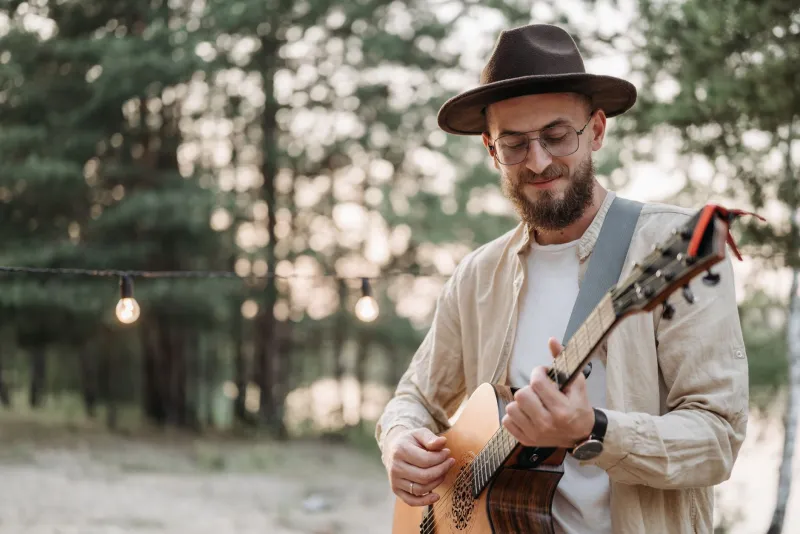
There's a moment that happens to a lot of songwriters. You're stuck. The melody you've been chasing for three days feels flat, the lyrics sound borrowed, and your bedroom studio starts to feel less like a creative sanctuary and more like a very expensive closet. So you step outside.
Maybe you live near a park, a marsh, or just a suburban backyard with a half-dead oak tree. And then you hear it—a bird doing something so specific, so rhythmically strange and emotionally loaded, that your brain lights up in a way no chord chart ever managed. That's the moment a lot of songwriters talk about when they describe finding their sound. Not in a studio. Outside.
Here at Henry W. Bird, this connection between the natural world and creative work sits pretty close to the heart of everything we talk about. So let's dig into why so many artists are heading outdoors for their best ideas—and what they're bringing back.
The Original Playlist Was Always Outside
Long before streaming algorithms and curated playlists, human beings were surrounded by sound they didn't produce themselves. Bird calls, insect rhythms, wind moving through different kinds of trees—these weren't background noise. They were the original sonic environment that shaped how our ears understand pattern, repetition, and surprise.
Ethnomusicologists have pointed out for decades that many traditional musical scales and rhythmic patterns across cultures bear striking similarities to the acoustic properties of birdsong. The wood thrush, native to the eastern US, sings in what researchers have identified as something close to a pentatonic scale. The hermit thrush—arguably one of the most hauntingly beautiful birds in North America—produces intervals that feel almost composed.
This isn't coincidence. It's co-evolution. We developed our sense of music in environments full of these sounds.
Folk, Electronic, and Everything In Between
What's interesting right now is that this nature-as-muse phenomenon isn't confined to one genre. You might expect it from folk artists—and sure, that lineage runs deep, from Woody Guthrie writing about the American landscape to more recent artists like Iron & Wine layering field recordings into their albums. But the connection extends well beyond acoustic guitars and campfire imagery.
Electronic producers have been sampling and manipulating birdsong for years. Artists working in ambient music—think the tradition that Brian Eno helped establish—have long used natural soundscapes as textural elements. But increasingly, producers working in indie pop, lo-fi, and even hip-hop are pulling in field recordings as rhythmic or atmospheric layers.
The reason? Authenticity. A sample of a real red-winged blackbird calling across a wetland carries a kind of emotional weight that a synthesized approximation simply can't replicate. Listeners feel the difference even when they can't name it.
Migration as Metaphor, Behavior as Structure
Beyond the literal sounds, birds offer something else to creative people: behavior that maps beautifully onto human experience.
Migration, for example, is one of the most compelling narratives in the natural world. Twice a year, billions of birds move across the continent, navigating by stars, magnetic fields, and memory. The emotional resonance of that—leaving, traveling through uncertainty, arriving somewhere that feels like home—is obvious to any songwriter worth their salt.
Several musicians have talked about watching migration patterns and using the arc of a bird's seasonal journey as a structural template for an album or a song cycle. The departure, the in-between, the arrival. It's a three-act structure that's been working since before anyone thought to call it that.
Nesting behavior offers different material—the patience, the repetition, the vulnerability of building something and hoping it holds. Territorial displays, mating calls, the way certain species sing most intensely at dawn: each of these behaviors carries narrative and emotional content that translates surprisingly well into song.
Getting Practical: How to Use Nature as a Creative Tool
If you're an artist looking to crack open your process a little, the good news is that you don't need to move to the wilderness. Here are some approaches that working musicians have found genuinely useful.
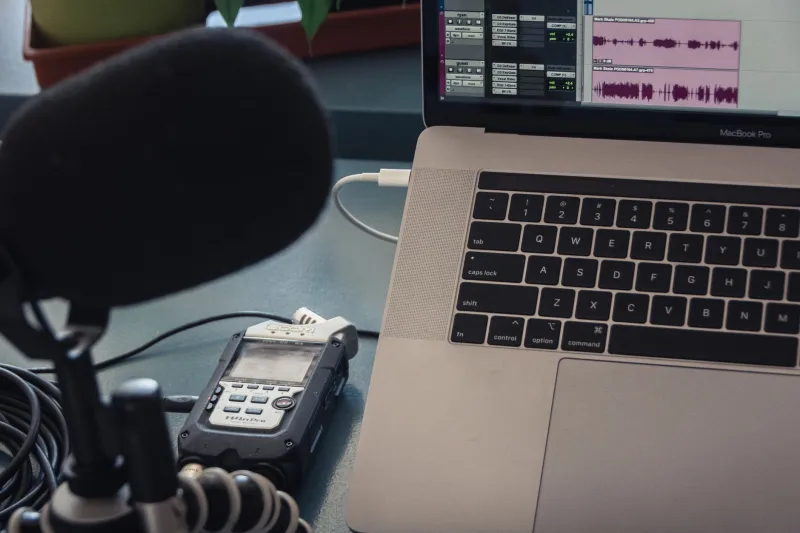
Record first, think later. Bring your phone or a portable recorder outside and just capture whatever's happening. Don't filter it. The goal isn't to collect usable samples on day one—it's to train your ear to hear structure and rhythm in sounds you'd normally tune out.
Study one species deeply. Pick a bird you can reliably hear near where you live and spend a few weeks paying close attention to it. The northern mockingbird, which lives across most of the US, is a particularly wild choice—it improvises constantly, mimicking other birds and sounds in sequences that feel almost like jazz improvisation.
Let behavior inform structure. Before you write your next song, spend twenty minutes watching birds at a feeder or in a park. Notice the push and pull, the interruptions, the moments of stillness. Then sit down and write. You might be surprised what shape the song takes.
Use natural soundscapes as a writing environment. Sometimes the shift is less about incorporating nature into your music and more about letting it surround you while you create. Apps like Merlin Bird ID from the Cornell Lab of Ornithology can help you identify what you're hearing, which adds a layer of specificity to the experience.
The Deeper Point
There's something almost philosophical happening when an artist turns to the natural world for creative fuel. It's an acknowledgment that the best material doesn't always come from inside your own head—that paying attention to something outside yourself, something that doesn't care about your career or your creative block, can shake loose ideas that introspection never would.
Birds, in particular, have a way of making you feel both small and connected. They were here long before the recording industry. They'll be here long after the algorithm changes again.
For anyone making music or art that's trying to say something real, that kind of perspective isn't just refreshing. It might be exactly what the work needs.